Arrow Feather (Yabane)
Meaning
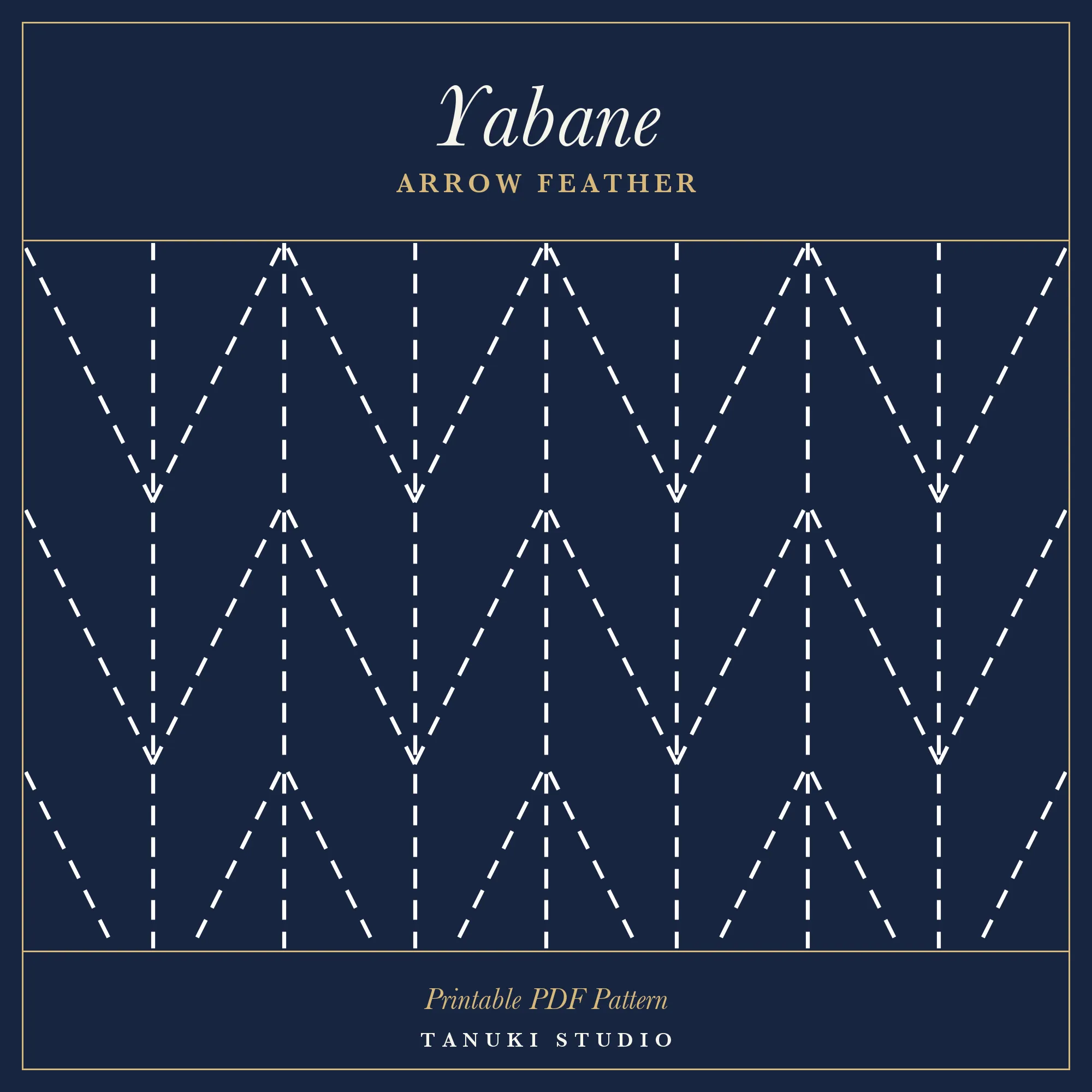
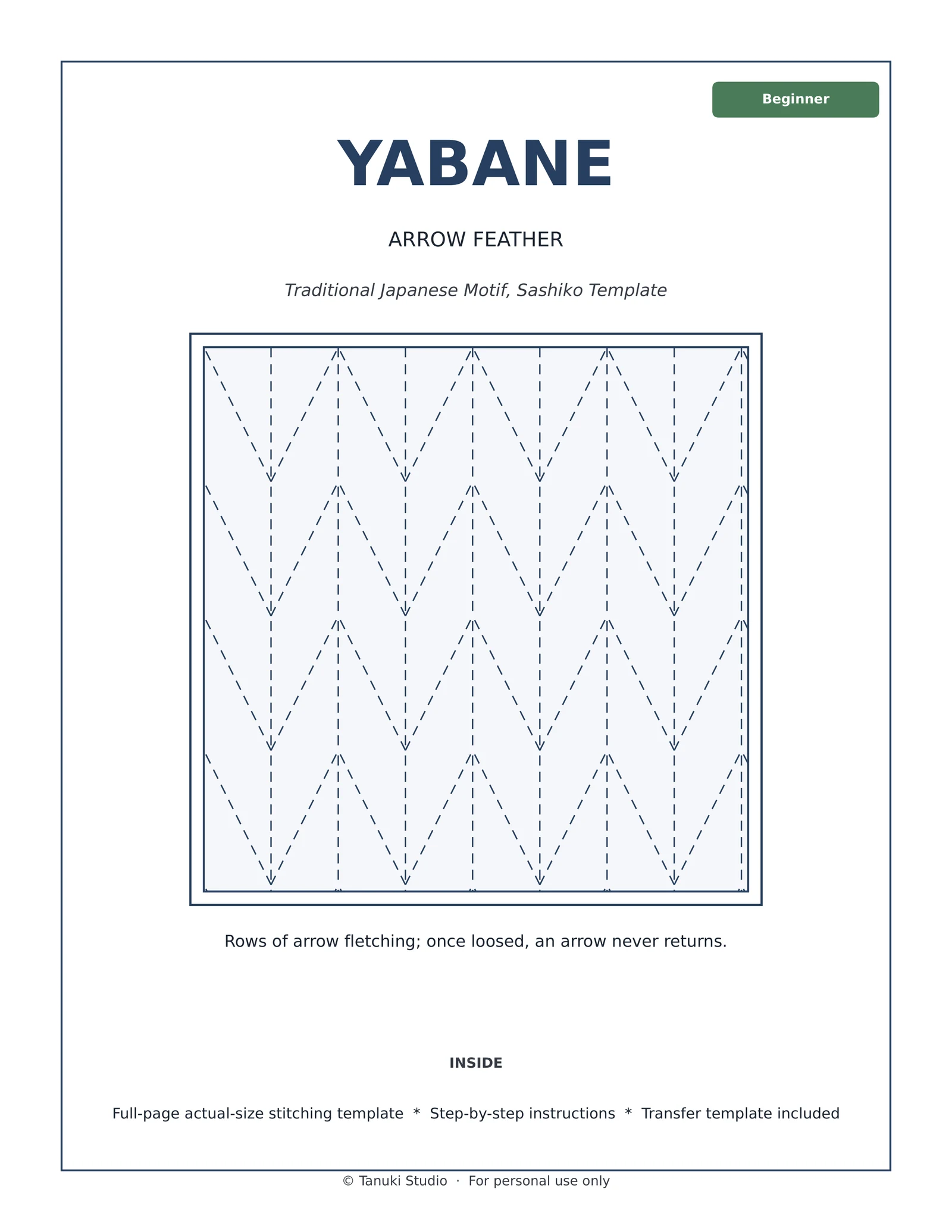
Yabane names the fletching on an arrow's shaft. Straight vertical lines run top to bottom, met by wide zigzag chevrons that read as feathers set at an angle.
Because a loosed arrow flies forward and does not turn back, the motif is often read as moving ahead without regret. A common craft story connects yabane kimono with Edo-period brides leaving home, carrying the same forward-moving wish.
History
A frequently cited Kofun-period haniwa figure from Gunma prefecture, dated to around the sixth century, is described as carrying an arrow-feather motif. Later sources place the design in Heian-period court dress and archery culture.
The later history is clearer: yabane became part of schoolgirls' hakama fashion during the Meiji era, a link still visible today in the pattern's association with graduation dress.
Stitching notes
Yabane sets a straight vertical shaft in every column, then crosses it with an aligned zigzag of fletching: each band steps down to an apex and back up to a peak at roughly a sixty-three-degree angle, so the bands stack into unbroken rows of downward-pointing arrows. It’s worked in a single color, traditionally white on indigo, which keeps the shaft-and-fletching structure easy to read at a glance.
The stitch order follows the shape: the vertical shafts first, top to bottom, then the zigzag fletching worked across each band in one continuous line, down to an apex and up to the next peak, without lifting the thread, making it one of the quicker beginner patterns in the shop.
Get the full pattern on Payhip
Additional sizes, an extended stitch guide, and a grid-spacing reference sheet.
Buy on Payhip → (opens Payhip in a new tab)Secure checkout via Payhip. Pay by card or PayPal.
Three free patterns, plus 15% off
Jūjizashi, Dan Tsunagi, and Komezashi, with a plain how-to for all three.