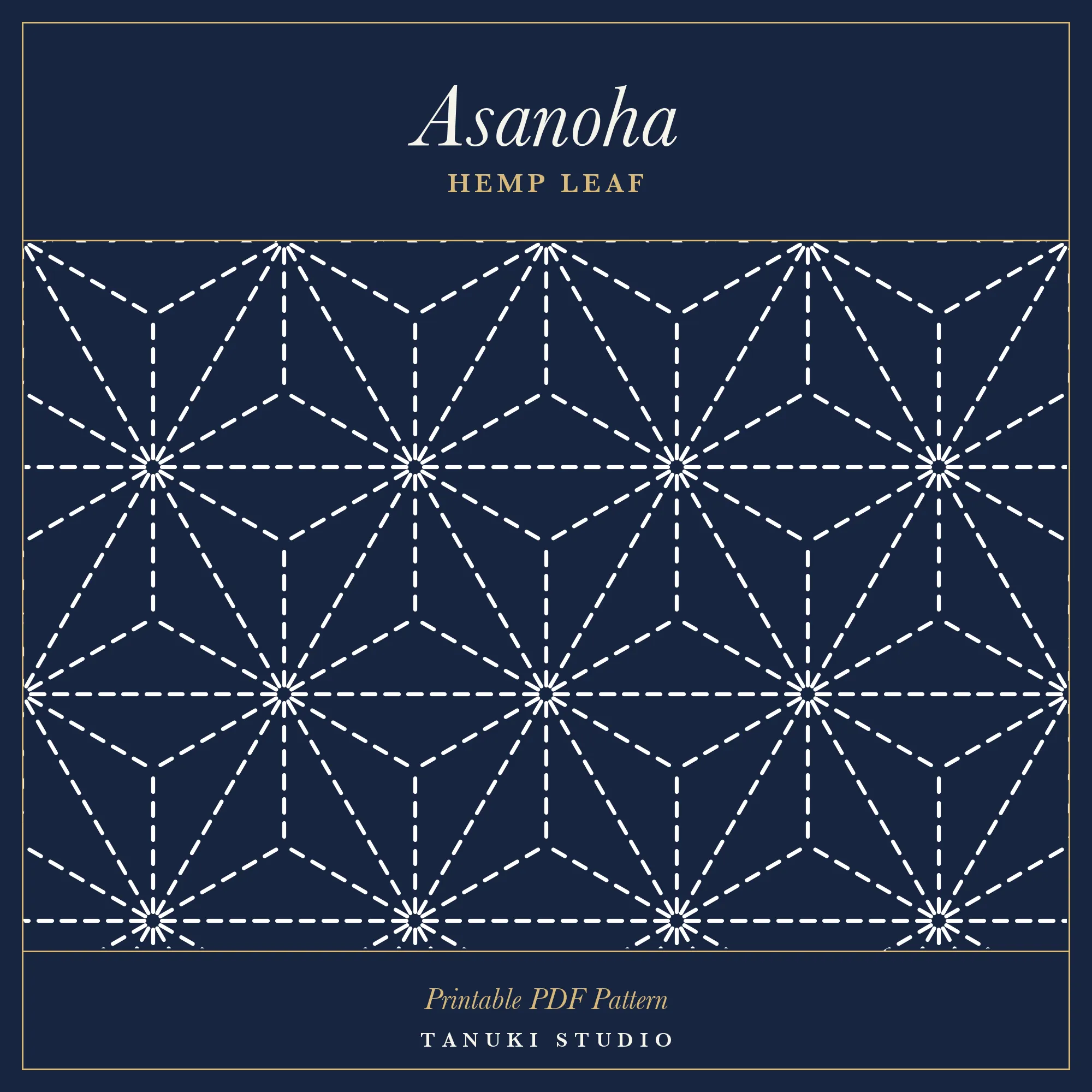
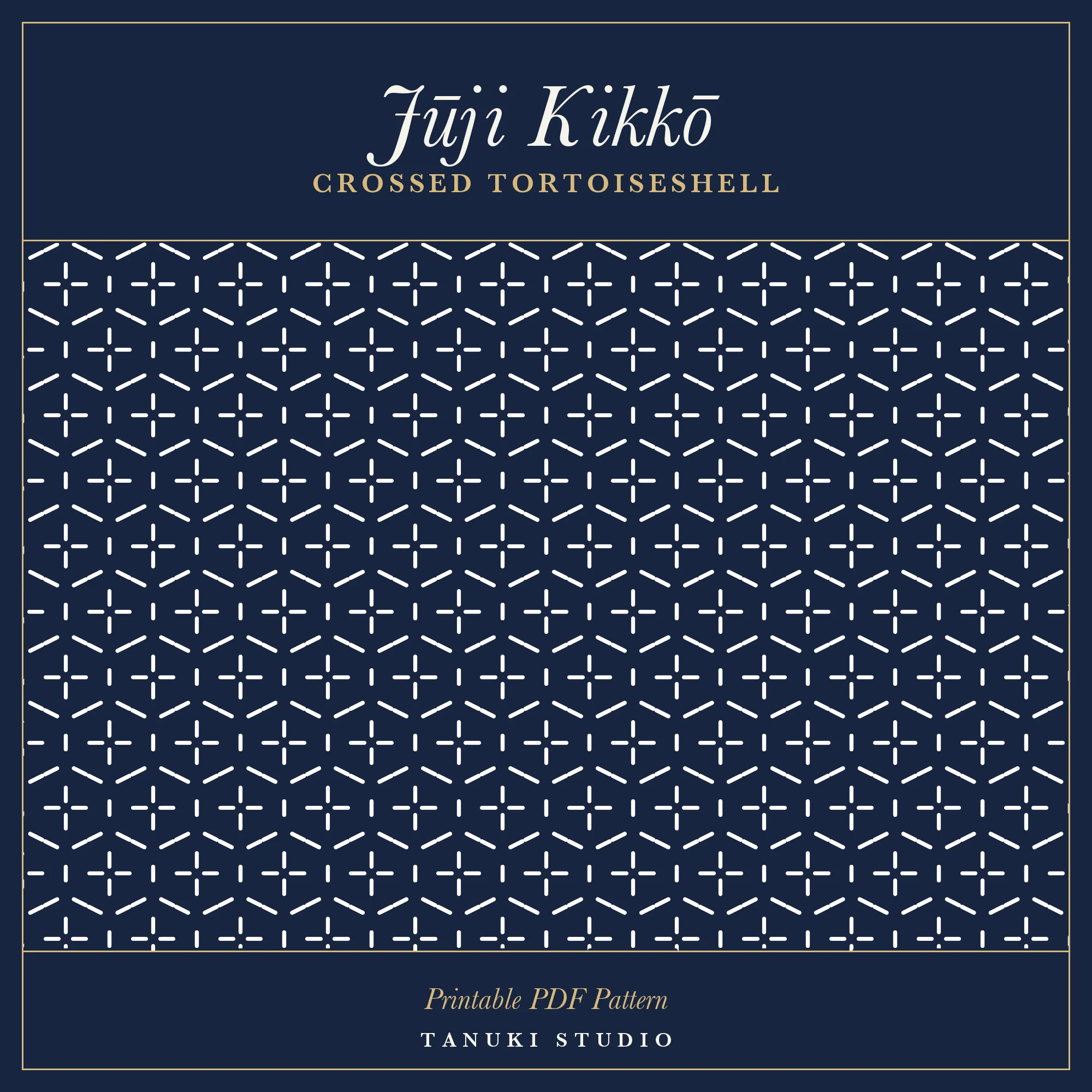
Circular Seven Treasures (Maru Shippō)
Meaning
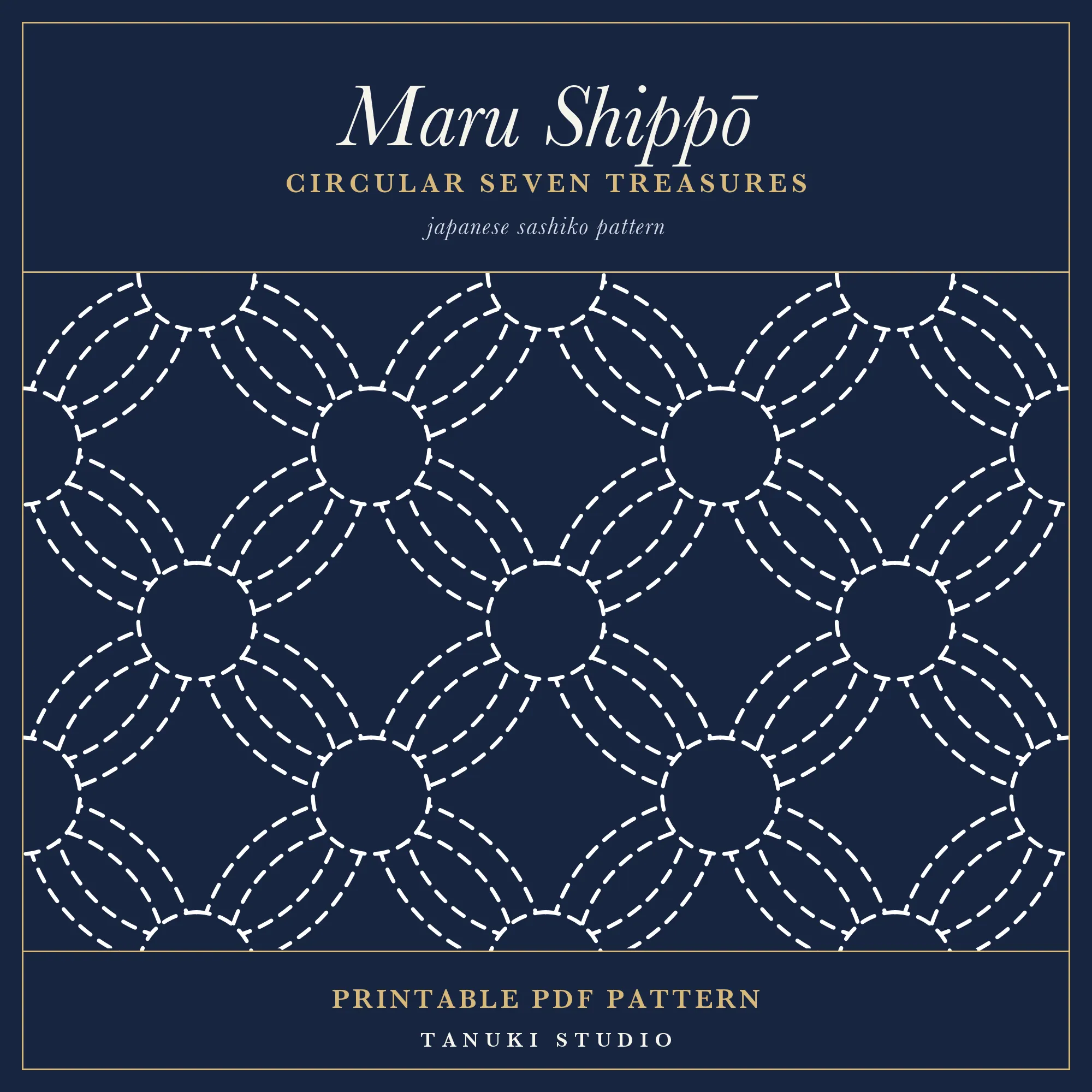
Maru shippō joins maru (circle) with shippō, literally "seven treasures," a term from Buddhist scripture for a set of precious materials commonly listed as gold, silver, lapis lazuli, crystal, coral, agate, and pearl (sources vary slightly on the exact seven, since Buddhist sutras themselves don't fully agree). The pattern doesn't literally repeat seven of anything; it borrows the name for its sense of abundance. Where the interlocking circles overlap, they form a four-petal, flower-like shape, and Japanese textile sources describe shippō as a wish for harmony and good relationships, helped along by a pun: the word for circle, en (円), sounds identical to en (縁), meaning a fateful or lasting connection.
History
Shippō's name and circle-and-jewel motif trace back to Japanese cloisonné enamelwork (shippō-yaki), the decorative craft that lent the geometric pattern its name before it spread into textiles, ceramics, and family crests; design historians place the motif in Japanese use since at least the Nara period (710 to 794).
Shippō tsunagi (linked shippō) became especially popular on women's kimonos during the Edo period (1603 to 1868), worn as a kisshō monyō, an auspicious "lucky omen" pattern reserved for celebrations, gift wrapping, and other happy occasions, alongside other unbroken-repeat motifs believed to carry good fortune.
Stitching notes
Maru Shippō is a forgiving pattern to learn on. The whole design comes from one tangent grid of same-size circles, each doubled with an inner line. Once the grid is marked, there is no freehand drawing left: only the arcs to follow.
The stitch path uses that repetition. Instead of working circle by circle, ride a continuous serpentine wave up and over one circle, into the next, all the way across the fabric. Then cross it with a second wave running the other diagonal direction. Work the small gap circles at each tangent point last.
Because every arc is doubled, small unevenness in one line barely registers. The eye reads the four-petal flowers the circles make together, not any single curve, so early stitches look cohesive even when they are not perfectly even.
Ways to use it
A first sashiko project
The doubled arcs and single repeating grid make this a low-stakes way to learn the whole workflow, marking, water-soluble stabilizer, stitching, before moving on to patterns with less margin for error.
A wedding or housewarming gift
Shippō's meaning as harmony and connection makes it a natural motif for a handkerchief, table runner corner, or small pouch given at a wedding or a new home.
Everyday table linens
The warm, repeating four-petal shape suits a set of napkins, a bread cloth, or a runner without overwhelming the fabric.
Simple hoop art
A few rows framed in a small hoop reads as soft, botanical wall art, an easy finish for a first completed piece.
For this pattern: Because the pattern layers three circle sizes (2 in outer, 1⅔ in inner, ⅔ in gap circles), marking goes faster and stays truer with a set of circle templates in those sizes rather than freehand tracing.
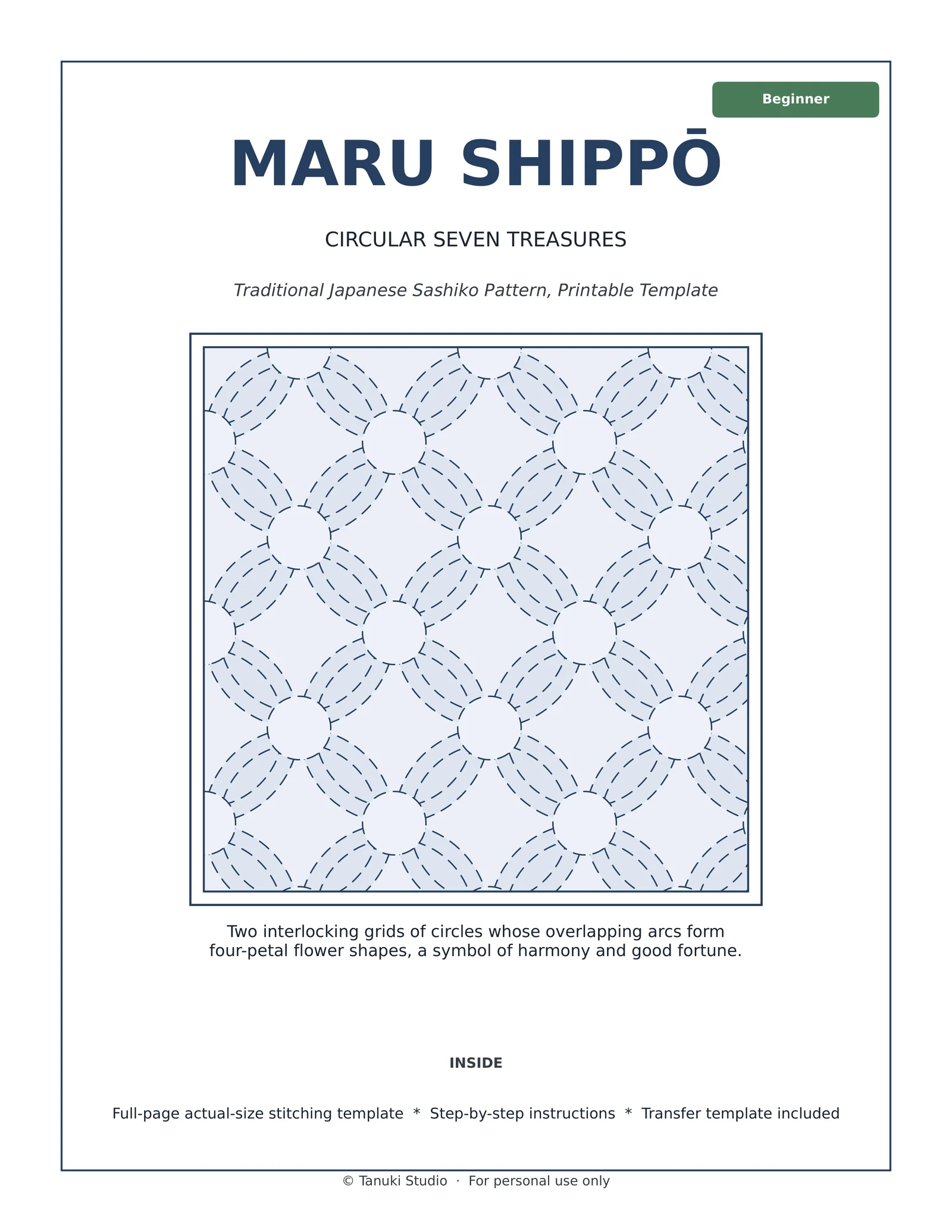
Get the full pattern on Payhip
Additional sizes, an extended stitch guide, and a grid-spacing reference sheet.
Buy on Payhip → (opens Payhip in a new tab)Secure checkout via Payhip. Pay by card or PayPal.
Three free patterns, plus 15% off
Jūjizashi, Dan Tsunagi, and Komezashi, with a plain how-to for all three.