Three Measuring Boxes (Tate Mimasu)
Meaning
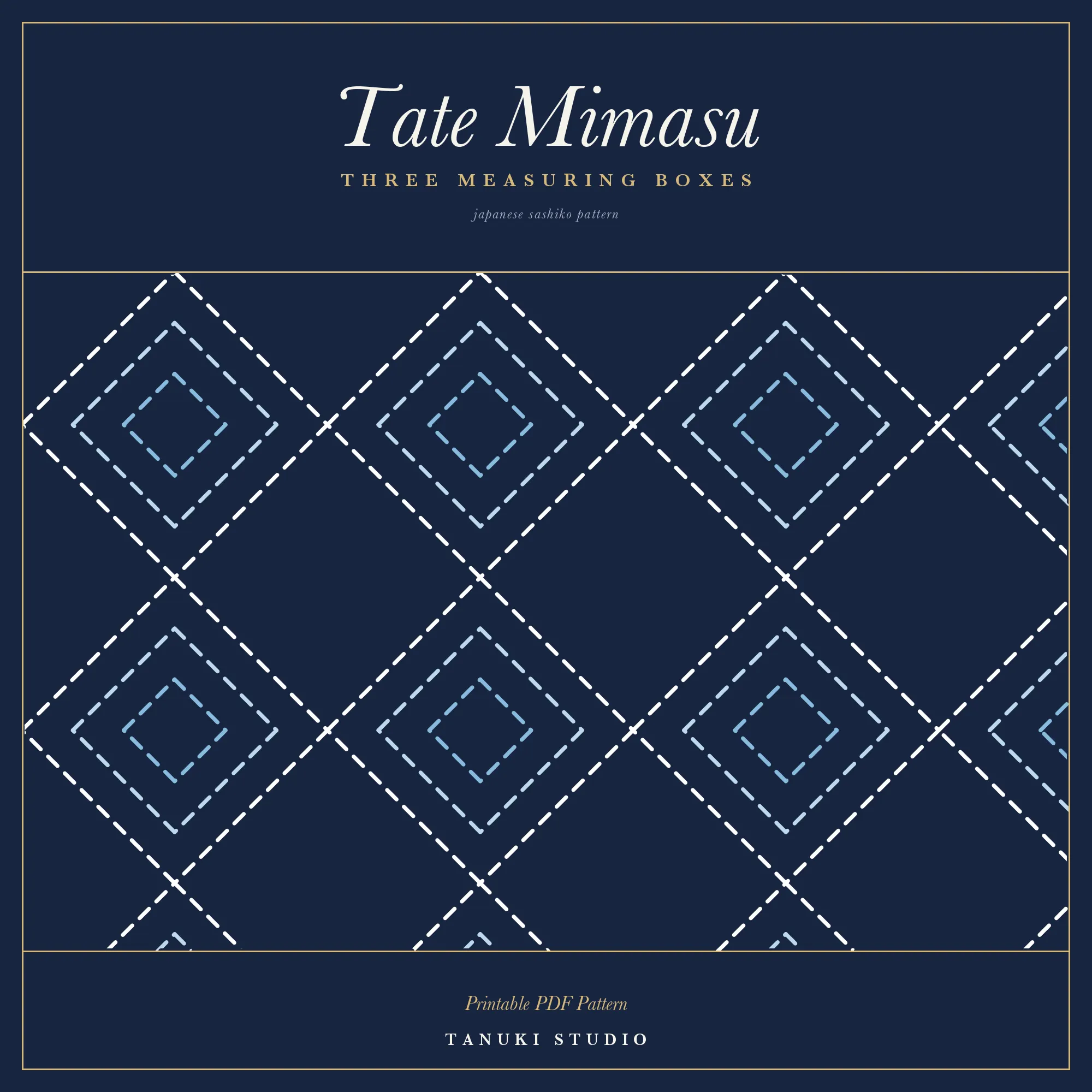
Mimasu combines mi, three, with masu, the wooden grain-measuring box. Because masu also sounds like a word for increase, the measuring box became a wish for growth and prosperity. Tate, standing or vertical, names this version's upright arrangement: three squares set one inside the next, each turned on point.
History
This nested-three-squares form has the clearest lineage of the masu variants here. It is the mimasu crest adopted by kabuki actor Ichikawa Danjūrō I in the Genroku era, roughly 1673 to 1704, as his aragoto stage emblem. It appeared behind him in the role of Shibaraku and was carried forward by generations of Danjūrō actors after him.
Its path into folk sashiko is less precisely dated. It is described, sometimes under the name masusashi, in regional Aizu, Yamagata, and Akita workwear traditions.
Stitching notes
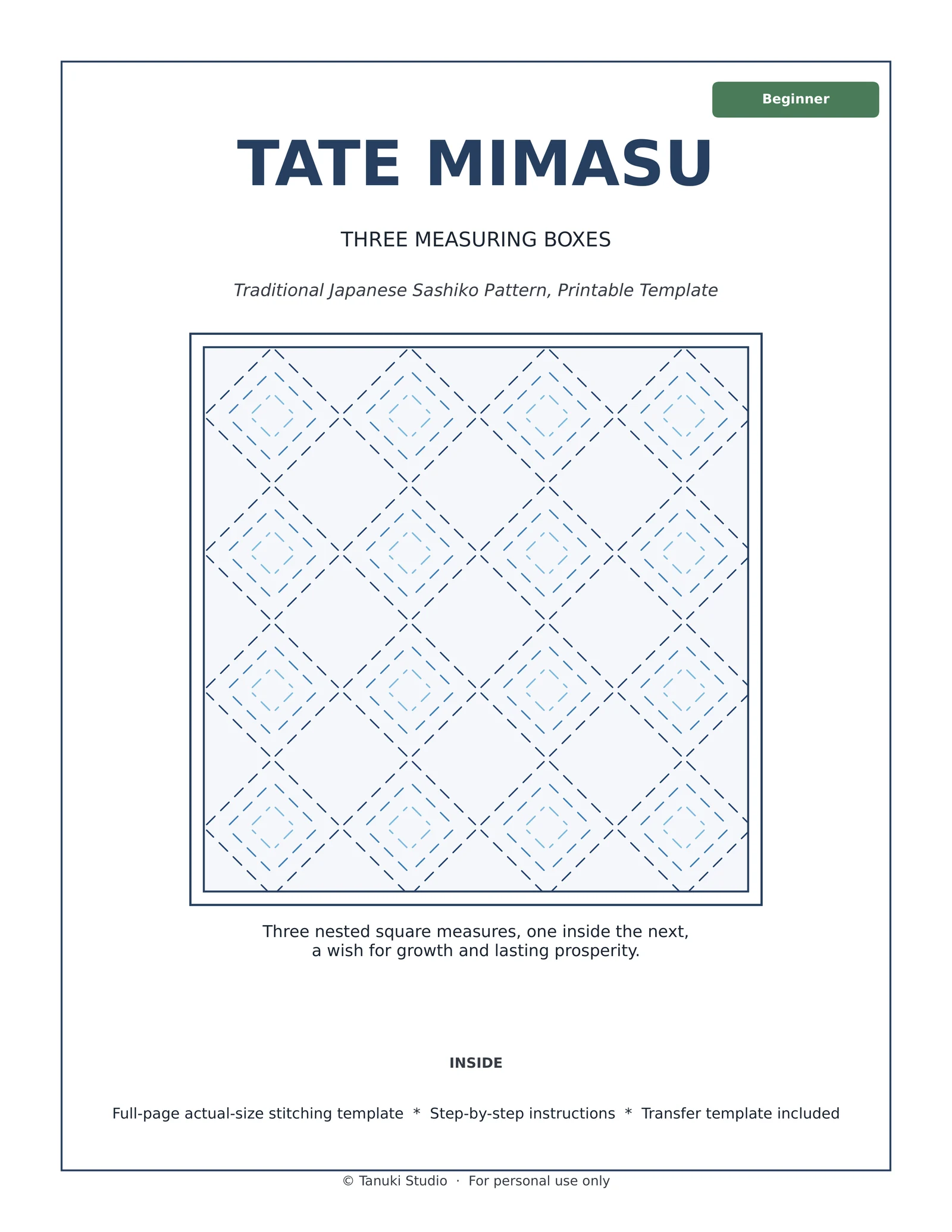
Tate Mimasu nests three squares on point inside each cell of a one-and-three-quarter-inch lattice. The squares step outward evenly from the center. Set on point this way, the outer square’s corners touch its four neighbors, leaving a small diamond-shaped gap between each cluster of boxes.
Where Kasane Masu interlocks its layers into one continuous field, Tate Mimasu keeps the nested squares distinct. Stitch each ring as its own pass, one tone at a time, moving from deep blue on the outer ring to light blue at the center.
Get the full pattern on Payhip
Additional sizes, an extended stitch guide, and a grid-spacing reference sheet.
Buy on Payhip → (opens Payhip in a new tab)Secure checkout via Payhip. Pay by card or PayPal.
Three free patterns, plus 15% off
Jūjizashi, Dan Tsunagi, and Komezashi, with a plain how-to for all three.