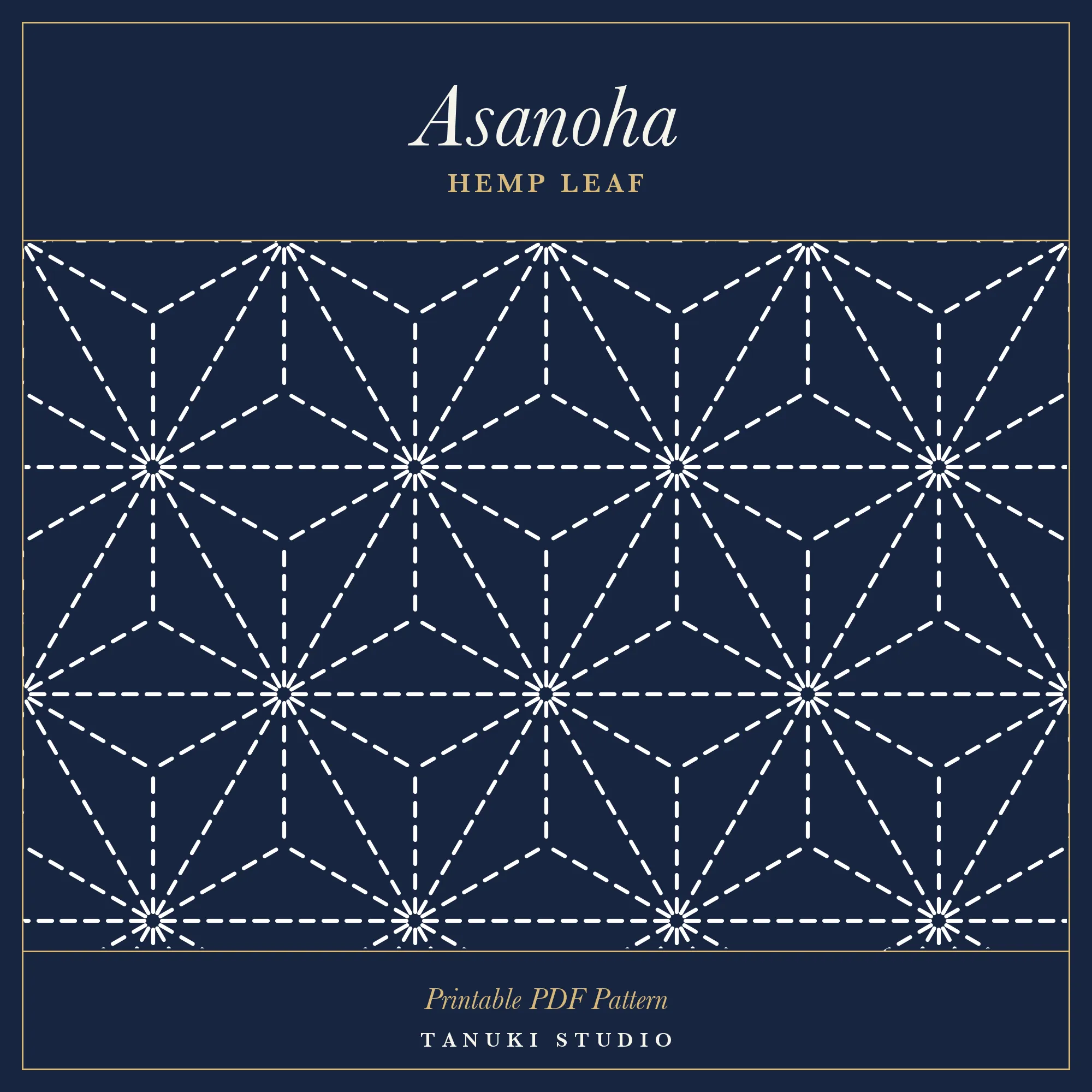
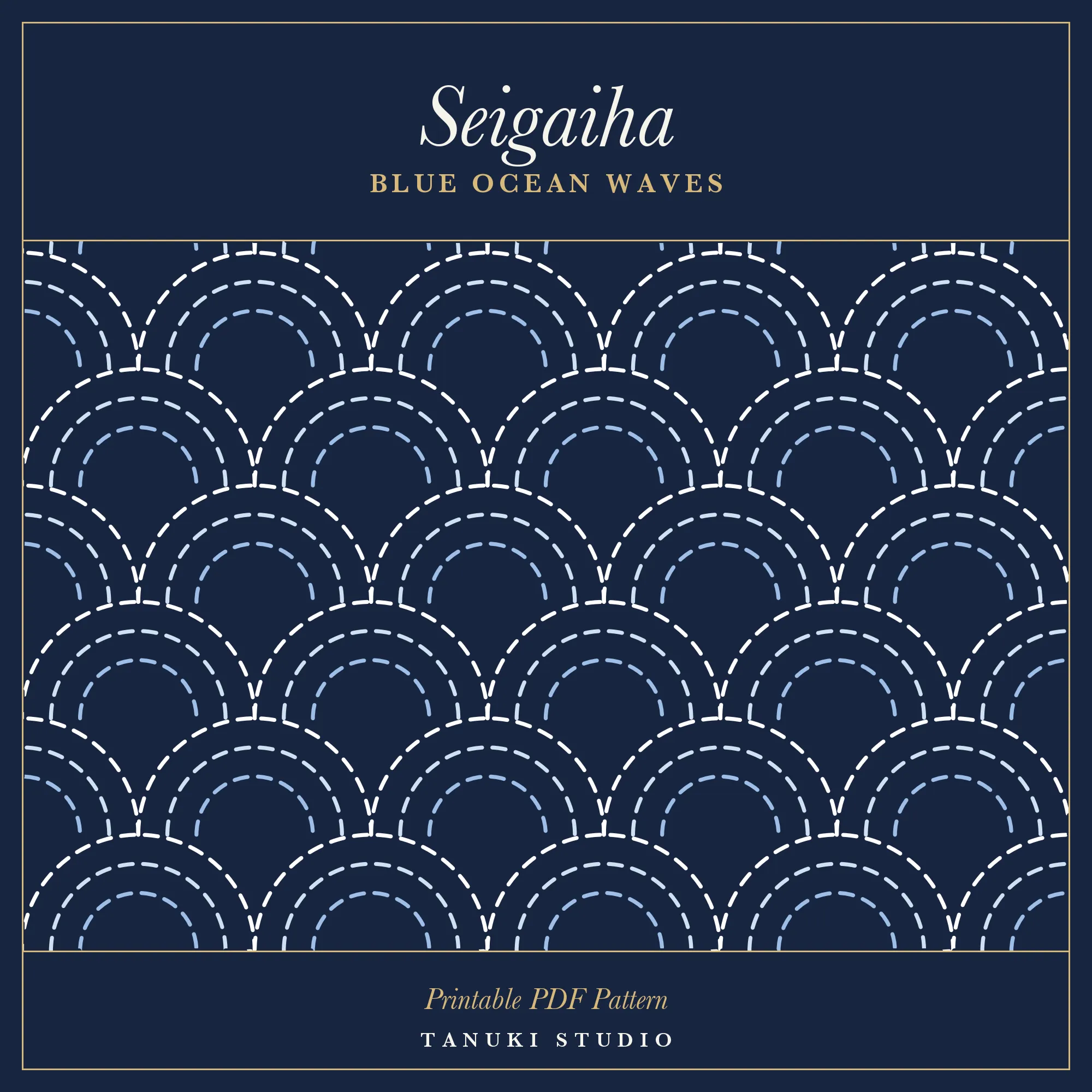
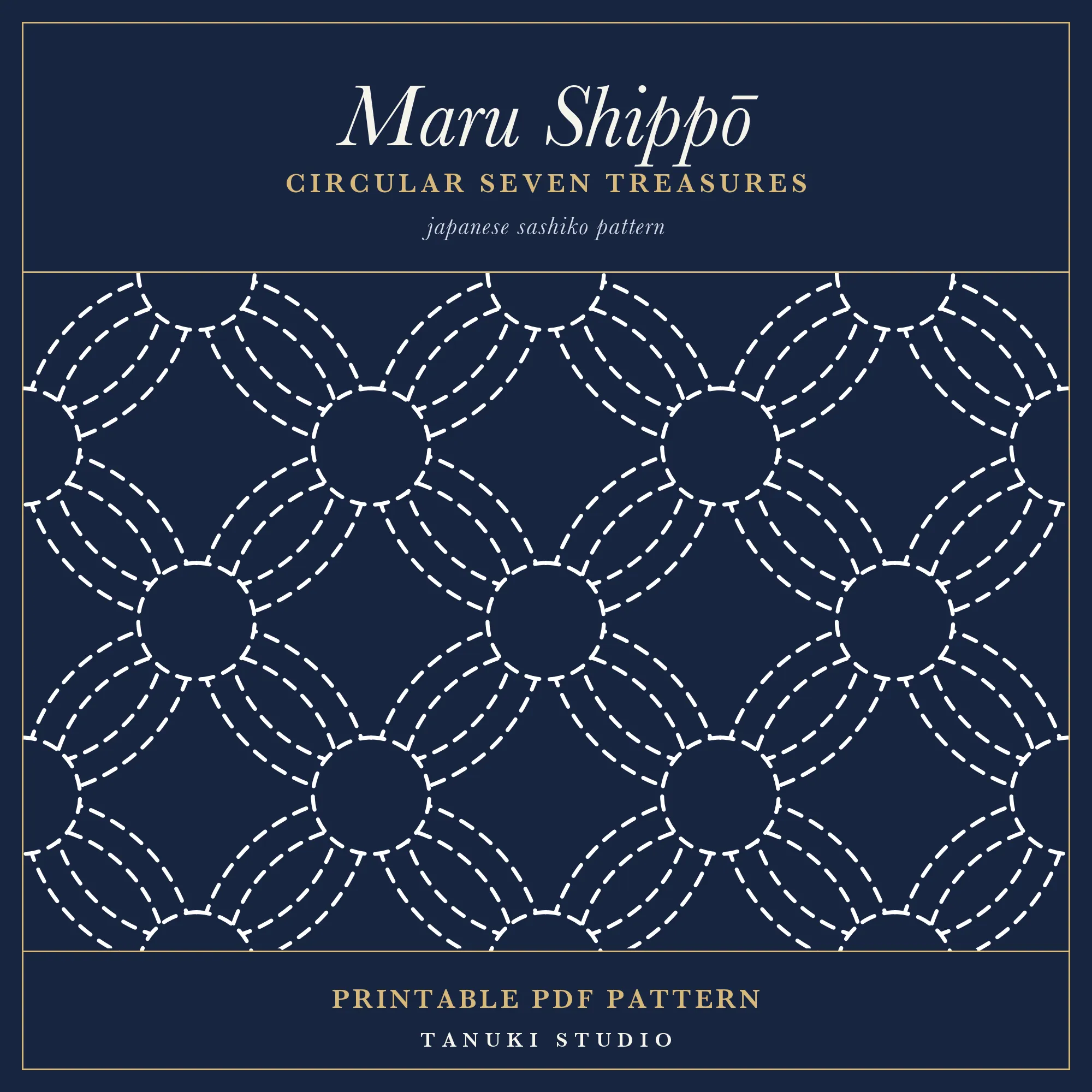
Linked Seven Treasures (Shippō Tsunagi)
Meaning
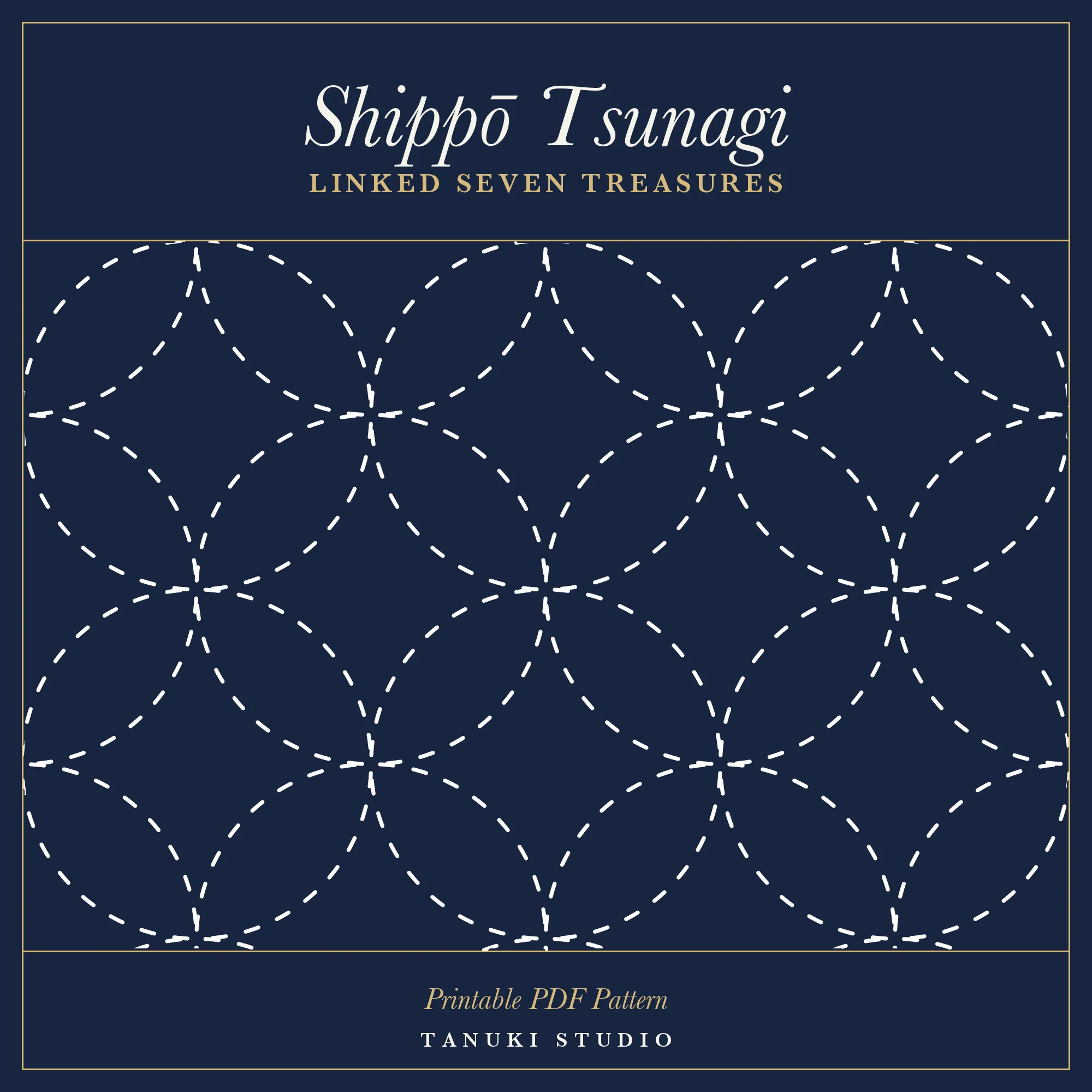
Shippō means "seven treasures," a name used for the overlapping-circle motif associated with harmony, continuity, and good fortune. Tsunagi means linked or connected, pointing to the way the circles join across the cloth.
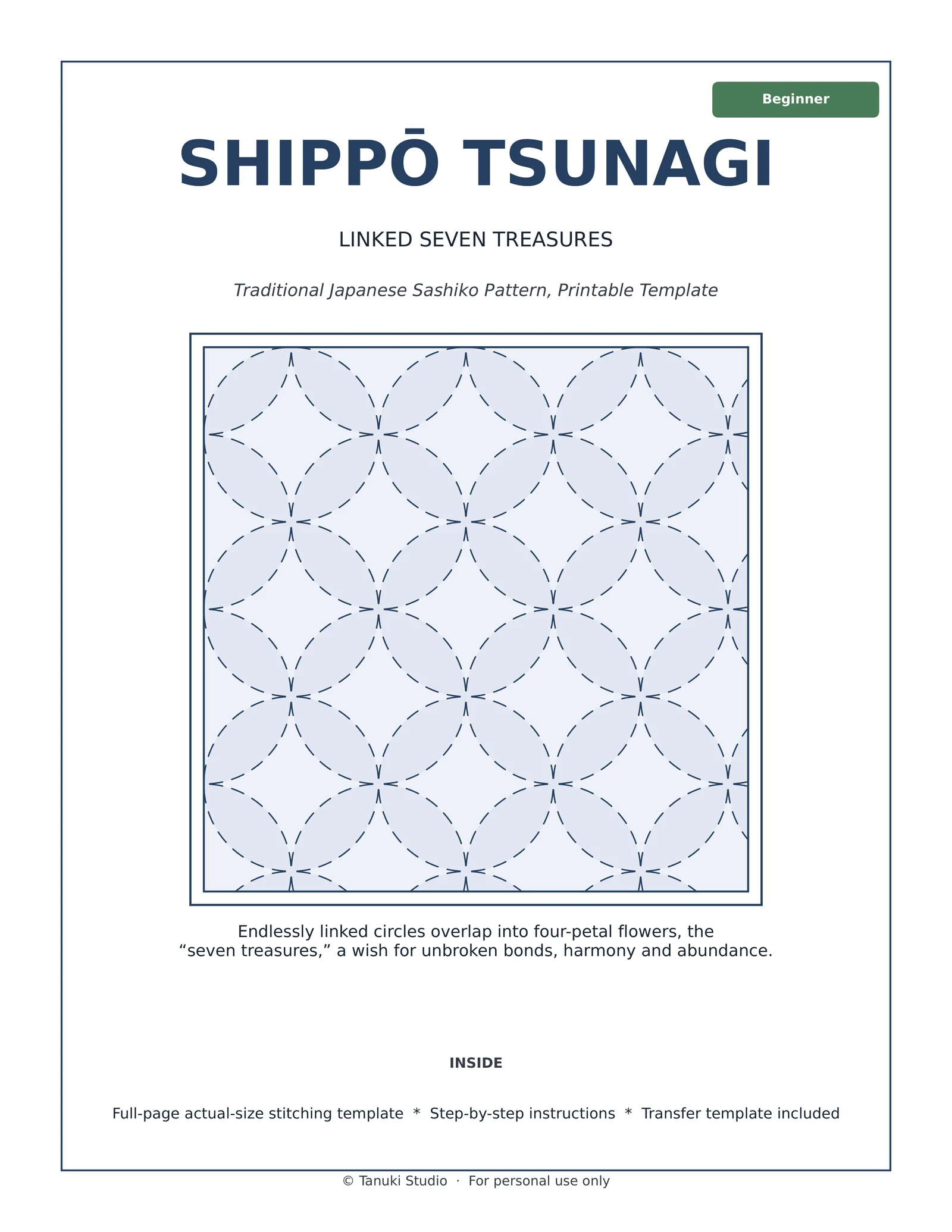
This version is the plain, continuous-line form of the motif. It keeps the linked-circle geometry, without the doubled arcs and small tangent circles used in Maru Shippō.
History
The history belongs to the larger shippō family rather than to the tsunagi wording alone. Overlapping-circle designs appear in early Japanese decorative arts and became common across kimono, lacquer, ceramics, and crestwork by the Edo period.
In sashiko use, shippō, shippō tsunagi, and maru shippō are sometimes named differently from source to source. This chart is the simple linked version: one continuous path of arcs across the fabric.
Stitching notes
Shippō Tsunagi is laid out on a checkerboard of circle centers. Each circle is two grid units across. Circles directly above, below, or beside one another meet at a tangent point; diagonal circles overlap and form the leaf shapes between them. Where four arcs meet, the pattern opens into the familiar four-petal shippō rosette.
Stitching works in two crossing serpentine passes, one down the columns and one across the rows. Together they cover every arc without retracing the same line.
It takes a bit more time than the geometry’s simplicity might suggest, since one long serpentine line has no natural stopping points to pause at partway through.
Get the full pattern on Payhip
Additional sizes, an extended stitch guide, and a grid-spacing reference sheet.
Buy on Payhip → (opens Payhip in a new tab)Secure checkout via Payhip. Pay by card or PayPal.
Three free patterns, plus 15% off
Jūjizashi, Dan Tsunagi, and Komezashi, with a plain how-to for all three.