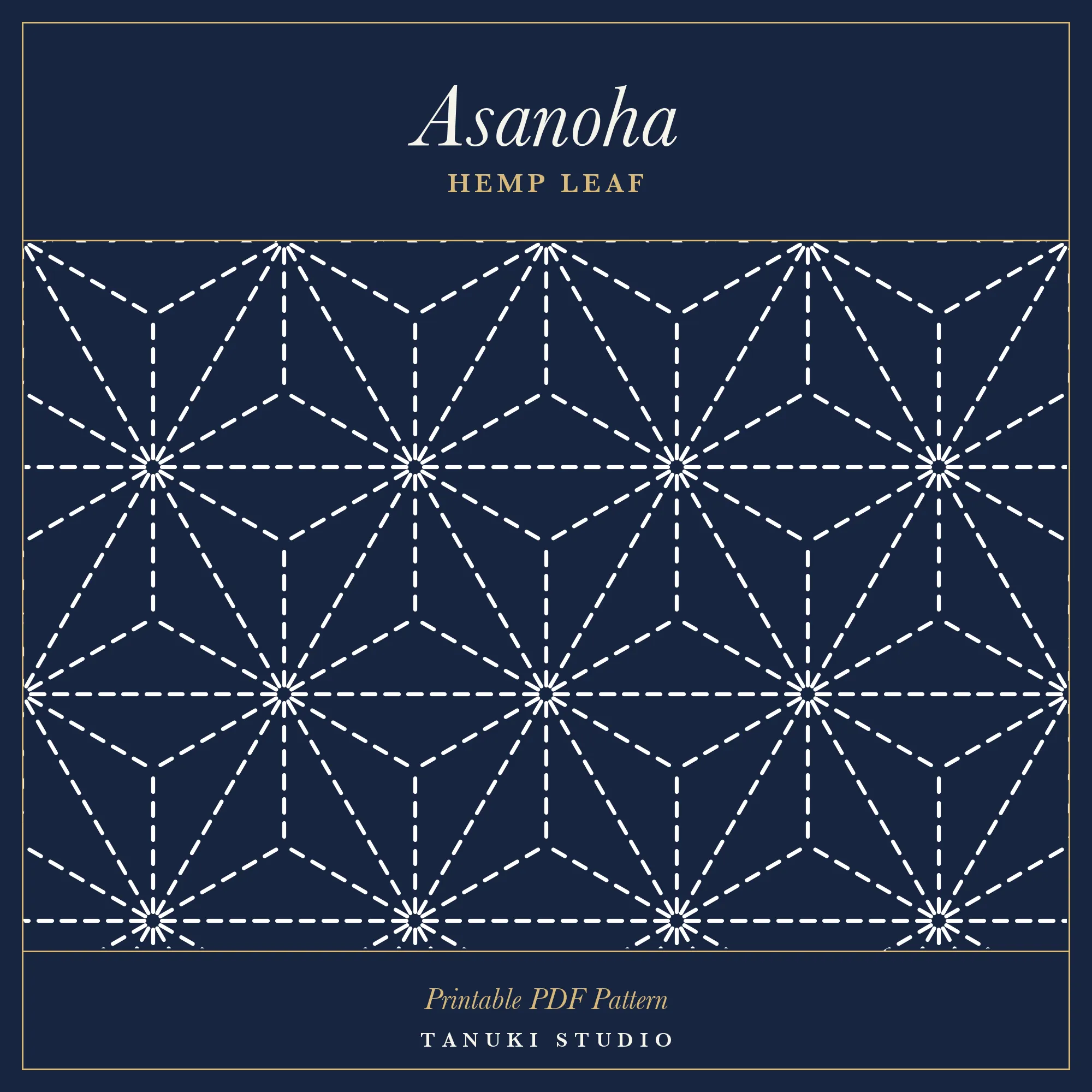
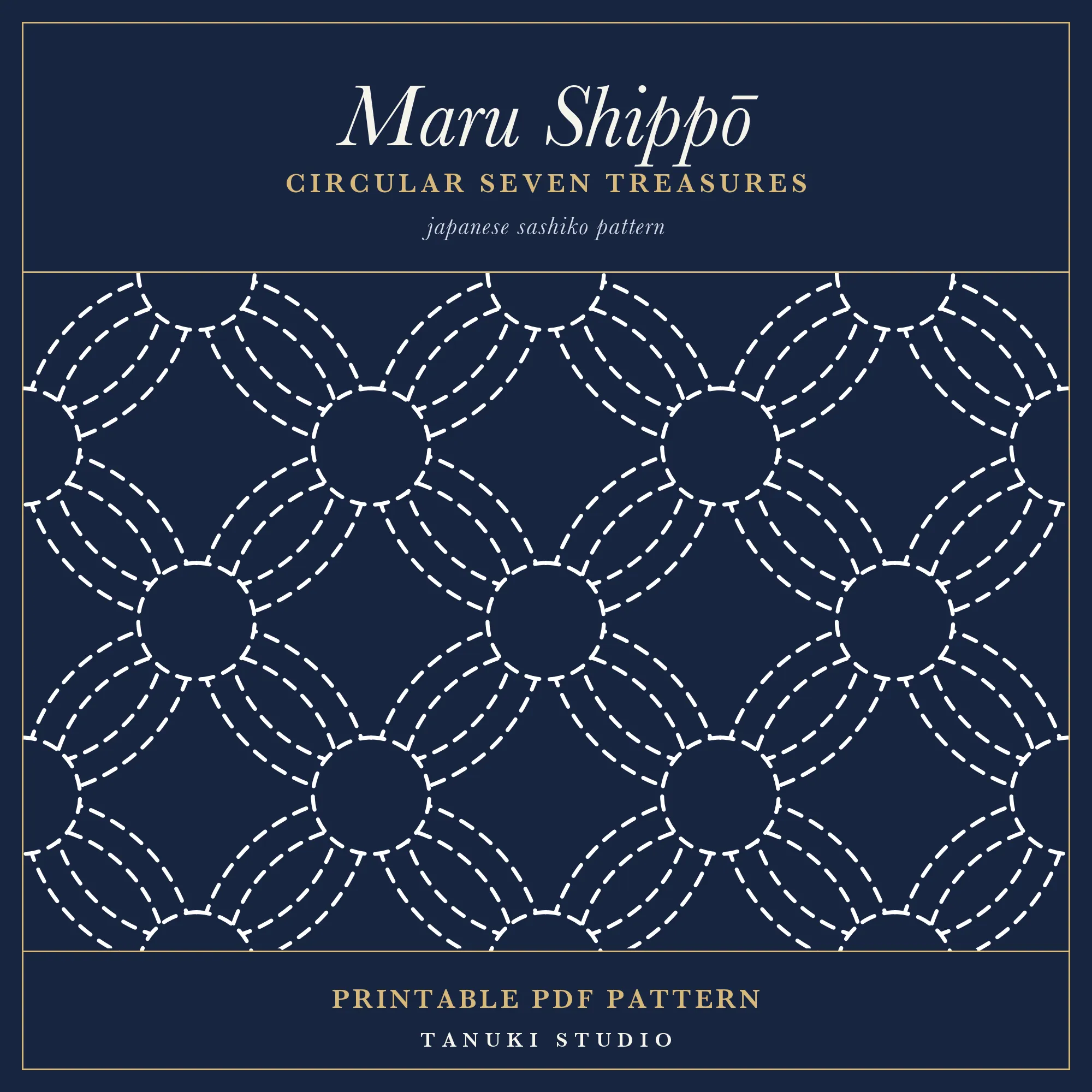
Stacked Measuring Boxes (Kasane Masu)
Meaning
Masu names the wooden box once used to measure rice and grain. It also sounds like masu, meaning to increase, which is why the measuring box became a wish for growth and prosperity. Kasane means layered or stacked, sharpening that sense of increase.
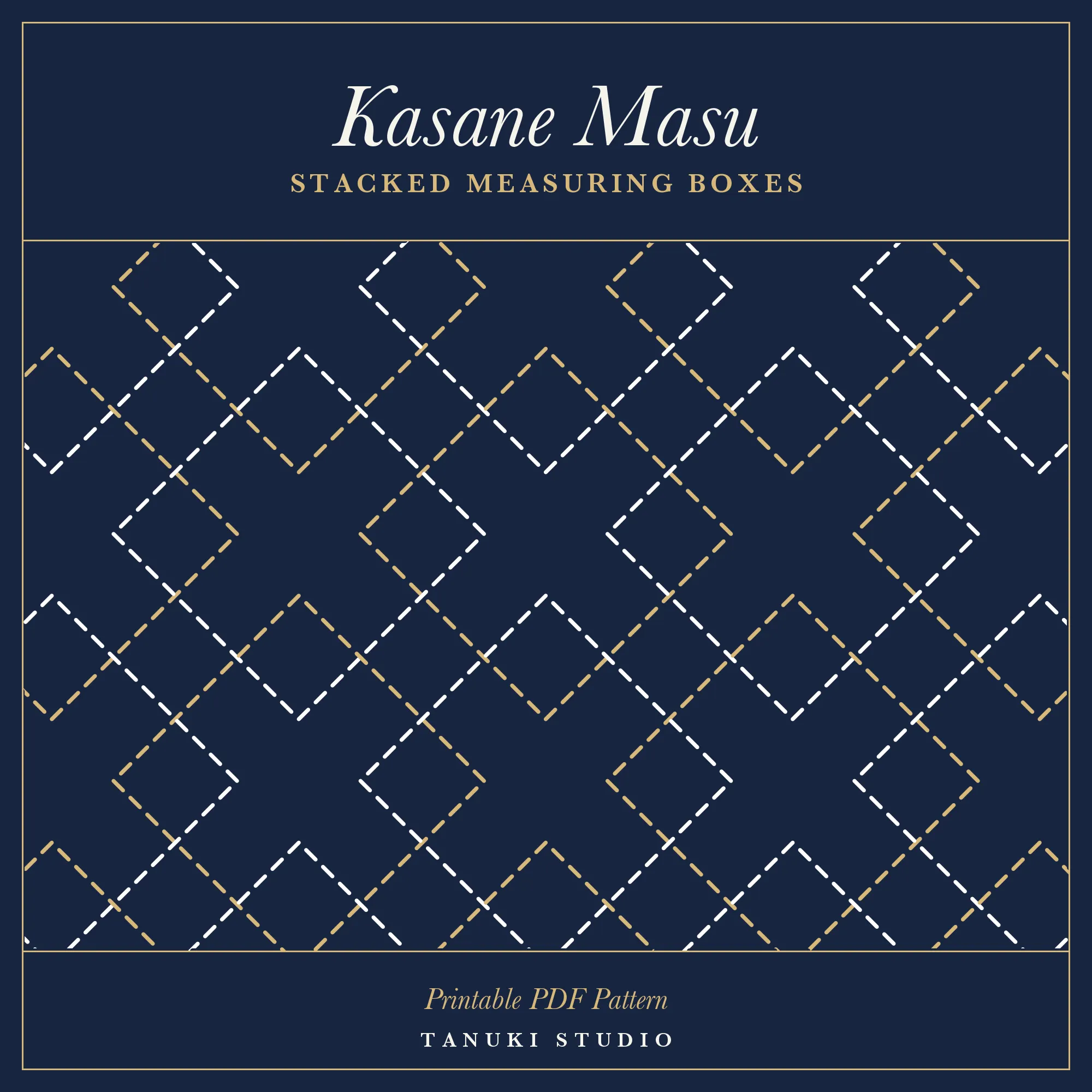
This version sets one square at the center of each unit with four more at its corners, visually distinct from the nested mimasu crest used in Tate Mimasu.
History
The masu itself has a long history as a real object. The oldest excavated example comes from the Nara-period capital at Heijōkyō, and the box was standardized nationally twice: first under Toyotomi Hideyoshi's Kyō-masu, then under the Tokugawa shogunate's Edo-masu.
Regional sources tie masu-style stitching loosely to Aizu, Yamagata, and Akita workwear traditions, though without a firm date for this stacked version.
Stitching notes
Kasane Masu sets one and a half inch squares on a two-inch lattice, with a second square in every cell offset by a full inch in each direction. The whole field is then rotated forty-five degrees, so what reads square on the page becomes a running lattice of interlocking diamonds on the fabric.
It is worked in two colors by layer: an indigo base square and a warm gold offset square. Each layer is stitched as its own continuous pass, with small gaps left at the crossings.
That two-layer, two-color construction is what earns Kasane Masu its beginner rating despite the layered look: each square is a simple, self-contained running-stitch shape, with no tricky interlacing to track, just two passes worked one after the other, one color at a time.
Get the full pattern on Payhip
Additional sizes, an extended stitch guide, and a grid-spacing reference sheet.
Buy on Payhip → (opens Payhip in a new tab)Secure checkout via Payhip. Pay by card or PayPal.
Three free patterns, plus 15% off
Jūjizashi, Dan Tsunagi, and Komezashi, with a plain how-to for all three.