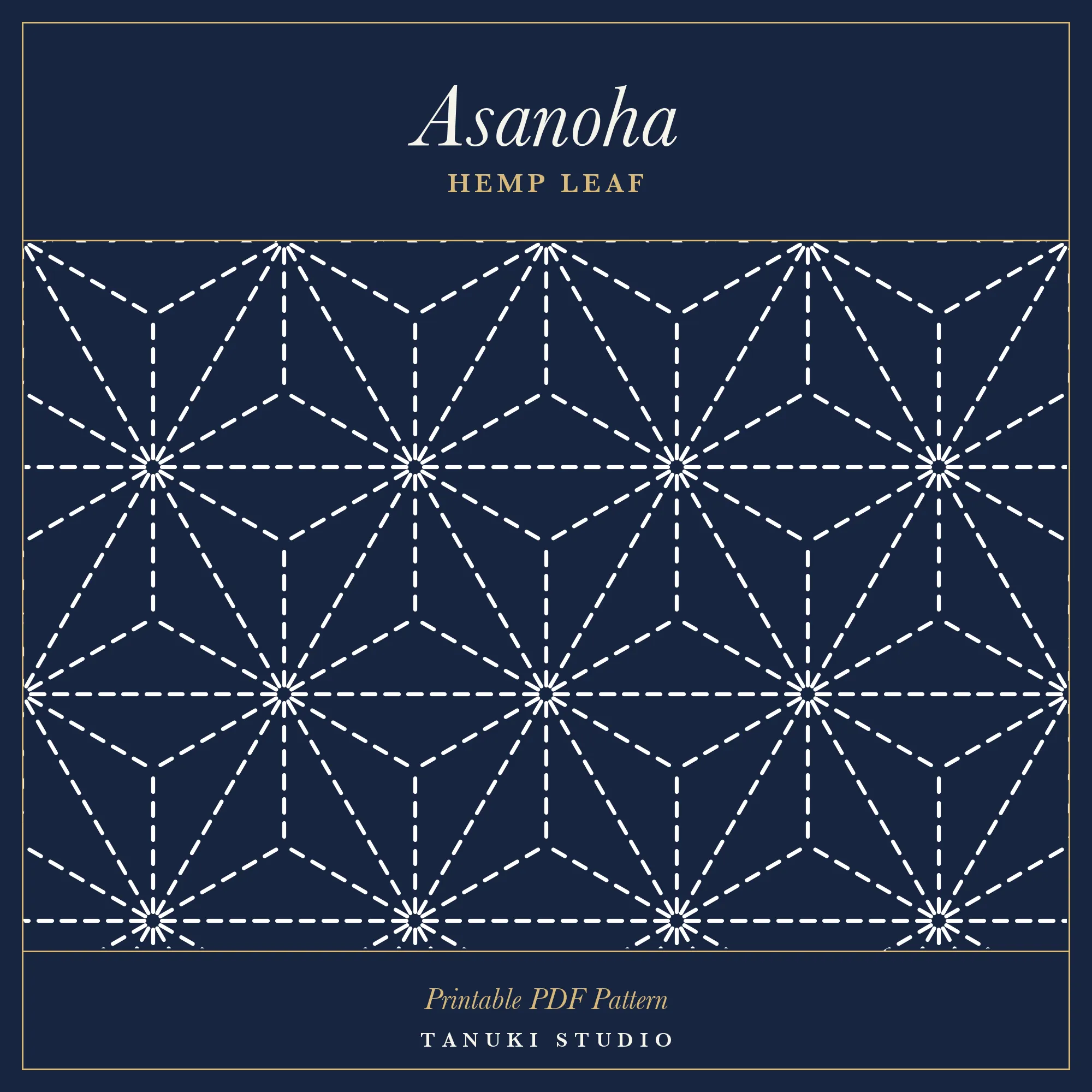
Five-Rod Weave (Gokuzushi)
Meaning
Gokuzushi takes its name from sangi, the wooden counting rods once used to work out calculations in traditional Japanese mathematics, before the abacus took over. Goku means "five," and this is the five-rod member of a small family of related lattice patterns (san-kuzushi, shi-kuzushi, goku-zushi) each named for how many rods bundle together in its weave. Like other patterns in the wider woven-lattice family, it carries a loose association with abundance, though that reading belongs to the family as a whole rather than to the five-rod count specifically.
History
The counting rods themselves have a well-documented history. They were everyday tools for arithmetic and had largely fallen out of use by the end of the Muromachi period (1336 to 1573), when the abacus became standard.
The lattice pattern outlived the tool, surviving as a woven motif in kimono textiles and architectural lattice work. Its move into stitched sashiko is not precisely dated, but it likely followed the same practical path as other lattice-derived motifs.
Stitching notes
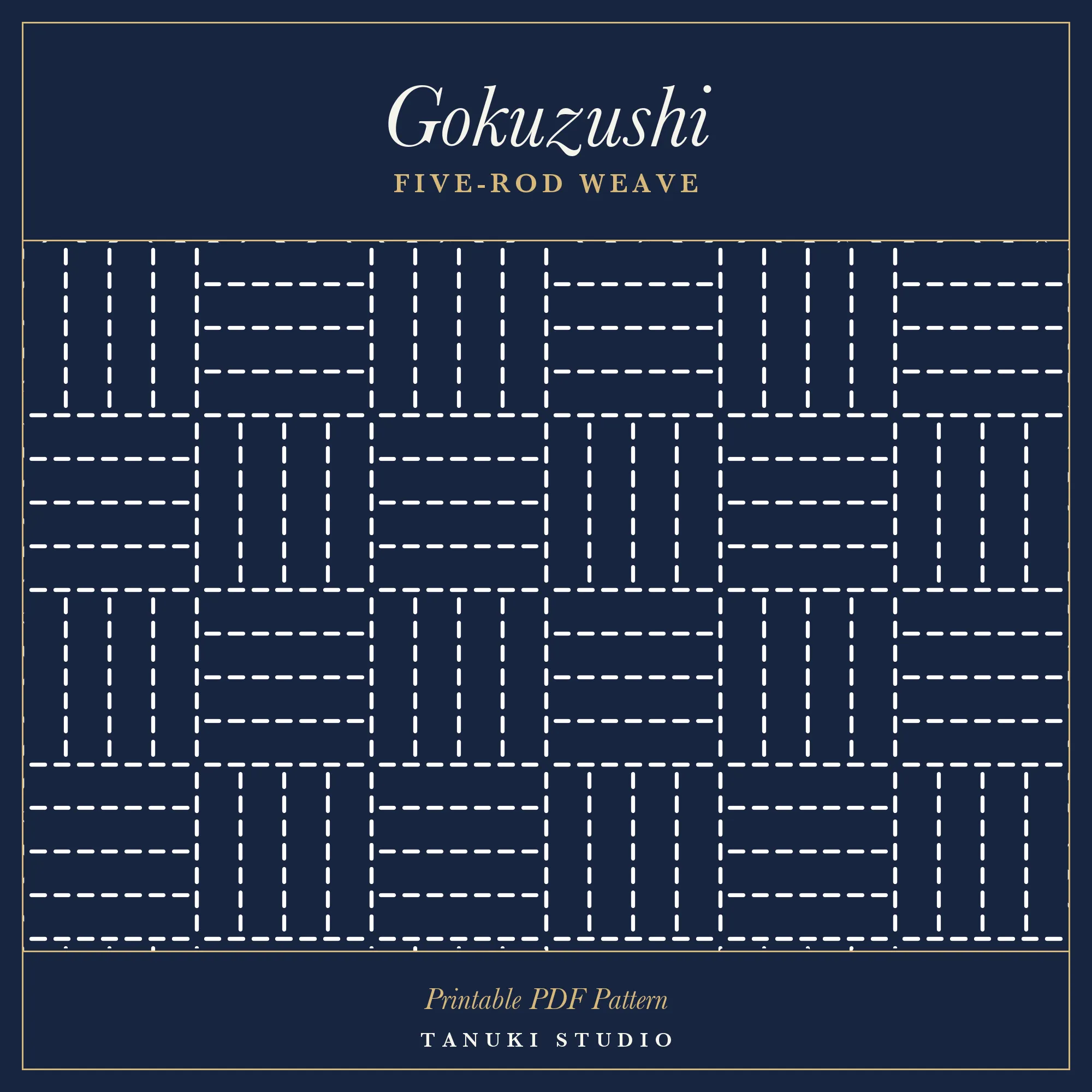
Gokuzushi is built from two-inch squares, each filled with five parallel lines set a half inch apart. Neighboring squares alternate direction: one runs its five lines vertically, the next horizontally, all the way across the piece. That turn is what makes the pattern read as woven basketry instead of a plain grid.
The stitching itself is a single pass. Work the long two-inch grid lines end to end first, then go back and fill each square’s five short half-inch lines, carrying the thread loosely on the back between one square and the next rather than knotting off each time.
Because every line in the design is straight, gokuzushi is a good pattern for building an even hand at running stitch before moving on to designs with curves or crossings to manage. The over-under weave illusion comes entirely from the alternating orientation of the squares, not from any change in stitch technique, so the geometry does the visual work while the stitching stays simple throughout.
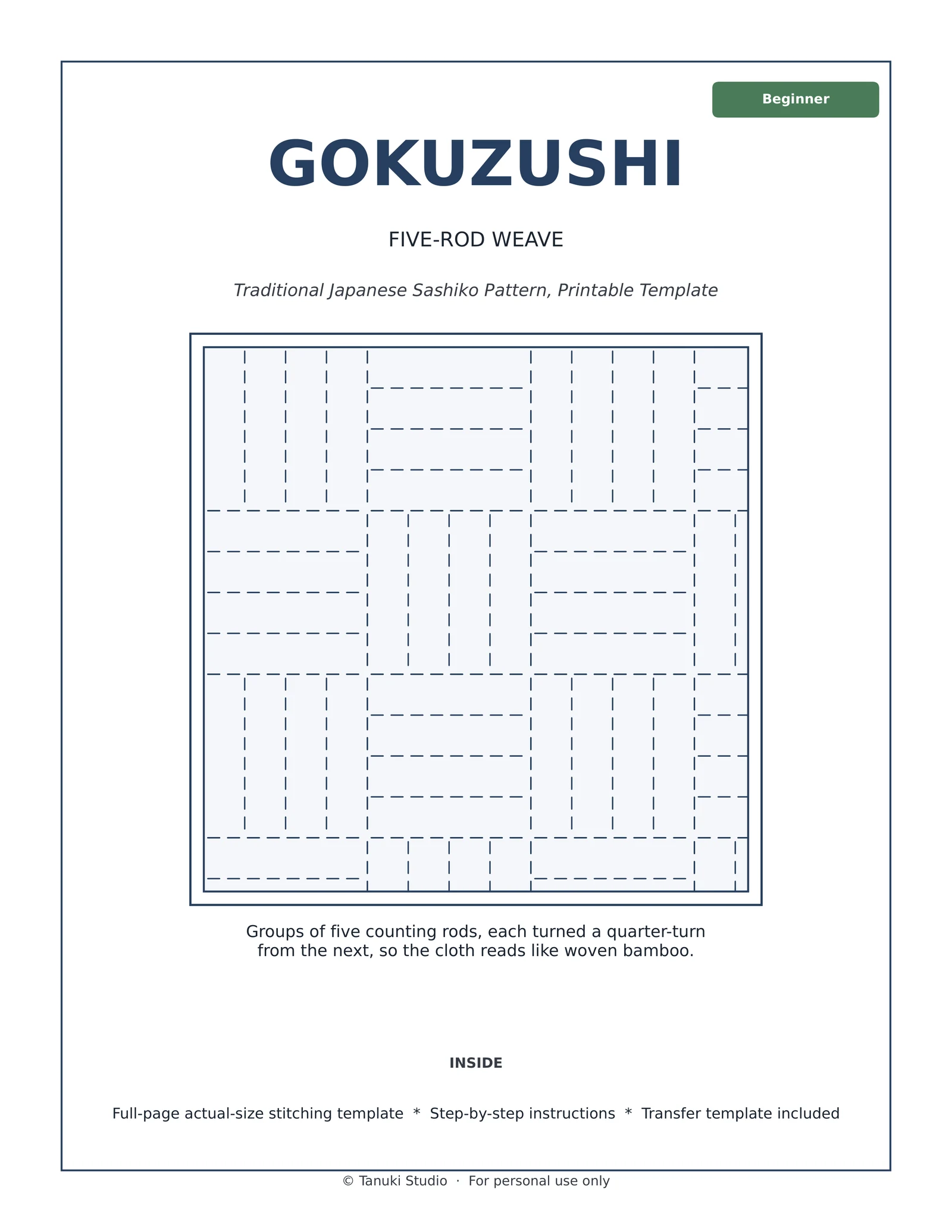
Get the full pattern on Payhip
Additional sizes, an extended stitch guide, and a grid-spacing reference sheet.
Buy on Payhip → (opens Payhip in a new tab)Secure checkout via Payhip. Pay by card or PayPal.
Three free patterns, plus 15% off
Jūjizashi, Dan Tsunagi, and Komezashi, with a plain how-to for all three.