Cedar Twill (Aya Sugi)
Meaning
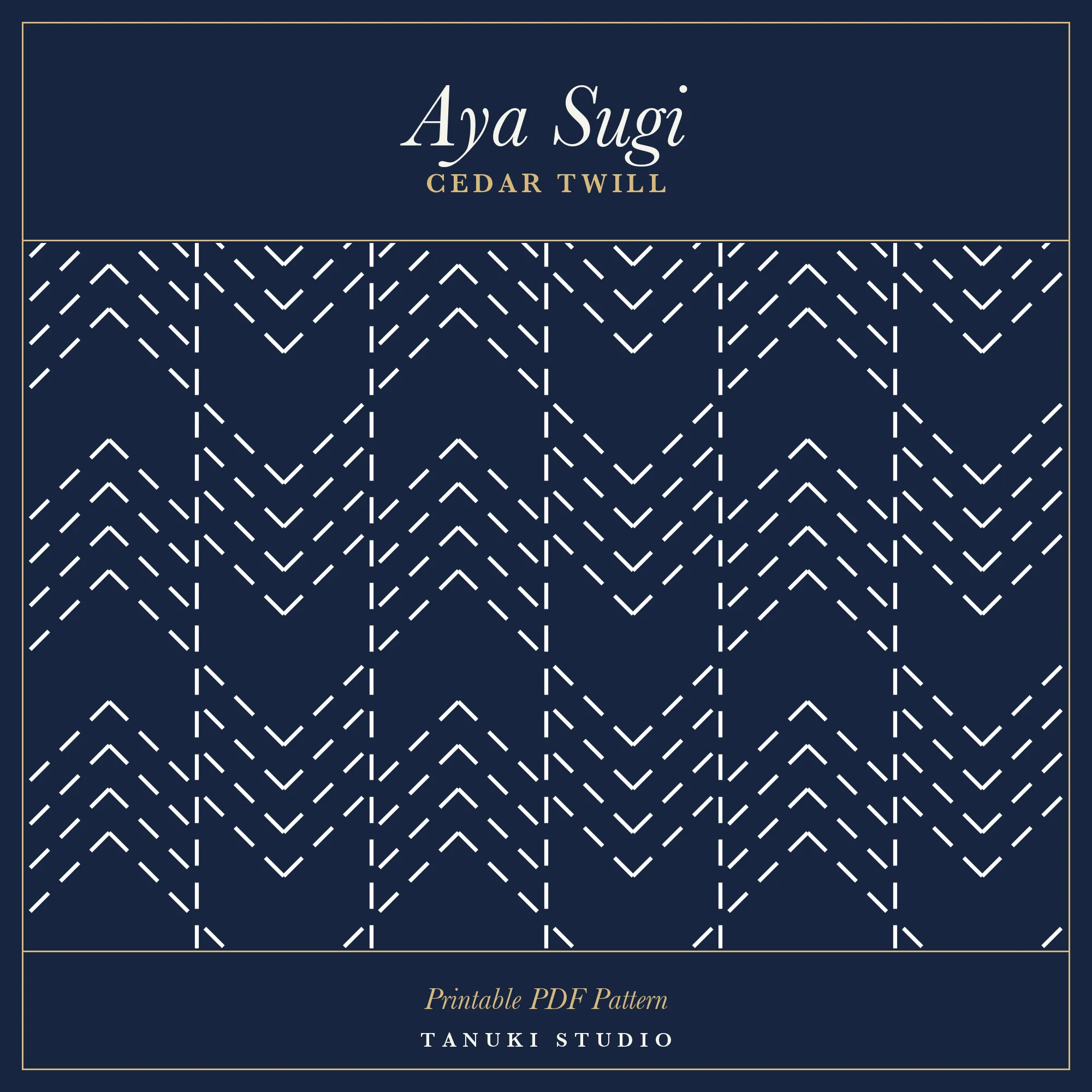
Aya sugi joins aya, a diagonal twill weave, with sugi, the Japanese cedar. The name points to a chevron shape, close to what Western textile language calls herringbone, but read through cedar grain instead of fish bones.
The meaning is simple here: a twill motif named for the look of cedar.
History
Aya sugi appears as a decoration term on Mishima-ware ceramics, and similar herringbone shapes appear elsewhere in Japanese pattern language: yahazu, yabane arrow fletching, and the woven ajiro lattice are close visual relatives.
A related regional stitch tradition, sugizashi ("cedar stitch"), is also named within Tohoku's Shonai sashiko lineage.
Stitching notes
Aya Sugi is marked in vertical columns of mirrored chevrons. Even columns point up, odd columns point down, and the offset lets the columns interlock cleanly. Stitch the straight vertical dividers first, top to bottom, before adding the chevrons.
Once the dividers are down, the chevrons are straightforward. Each one climbs one arm and descends the other at a clean 45 degrees. Work a column from top to bottom, carrying the thread on the back along the divider where it makes sense.
True to its beginner rating, the geometry is forgiving, and the only real discipline is keeping that 45-degree angle consistent from column to column.
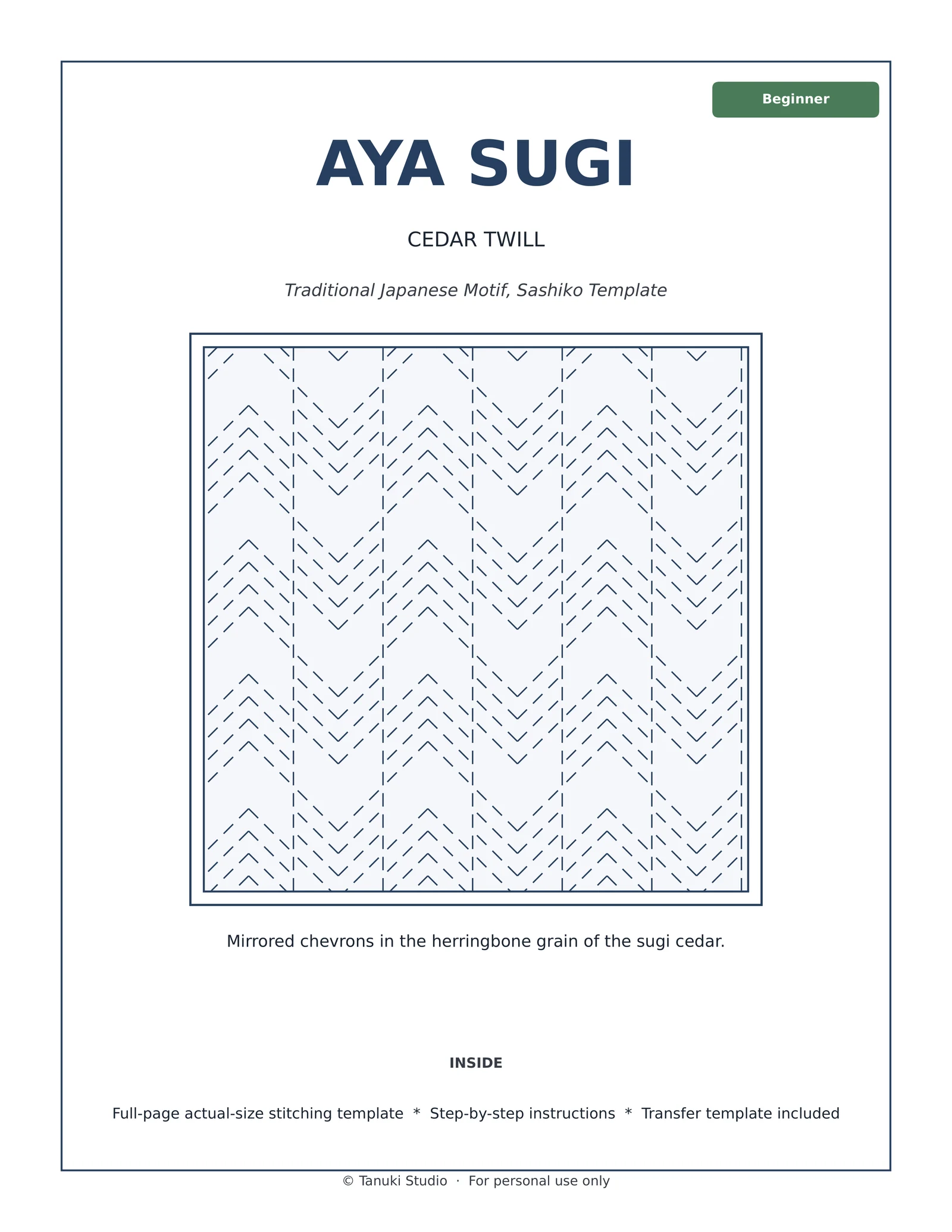
Get the full pattern on Payhip
Additional sizes, an extended stitch guide, and a grid-spacing reference sheet.
Buy on Payhip → (opens Payhip in a new tab)Secure checkout via Payhip. Pay by card or PayPal.
Three free patterns, plus 15% off
Jūjizashi, Dan Tsunagi, and Komezashi, with a plain how-to for all three.