Where sashiko began
Sashiko took shape during Japan’s Edo period (1603–1868), when cloth was precious and made entirely by hand. In the farming and fishing communities of the north, where winters were long and hard, no scrap of fabric could be wasted. Families mended, layered, and reinforced their clothing and bedding with rows of small running stitches — work that made cloth warmer, stronger, and longer-lasting.
It most likely began as plain darning — tsukuroi sashi — before stitchers noticed the pattern hiding in their repairs. Skill with the needle mattered: girls learned sashiko at village needlework schools through the slow winter months, and it was counted among the makings of a good farmer’s wife.
”Little stabs”: the name and the stitch
The word sashiko comes from the Japanese verb sasu, “to pierce” or “to stab,” and is often translated as “little stabs” — for the small, steady stitching action at the heart of the craft. Traditionally it’s a simple running stitch worked in white cotton thread on indigo-dyed cloth, the pale stitches standing bright against the deep blue. Indigo did more than look striking: it was thought to strengthen the cloth, and was even believed to help keep snakes and insects away.
Boro: making cloth last
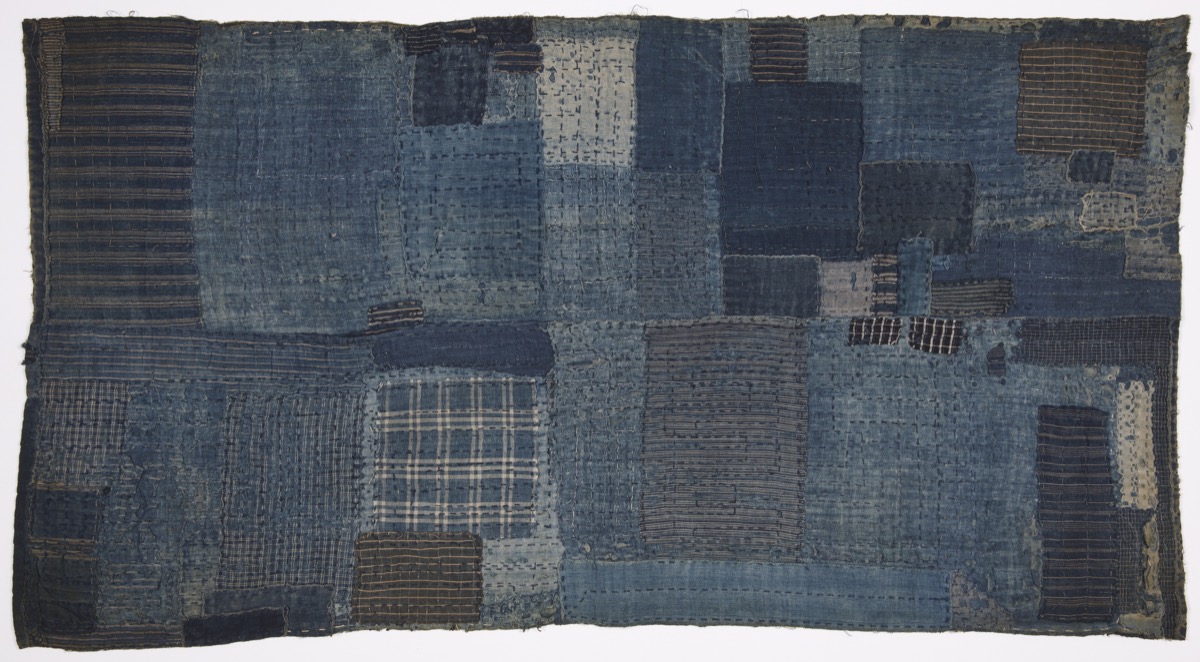
As garments and bedding wore thin, they were patched with whatever was on hand and stitched down again, layer over layer — sometimes over generations, until you could no longer tell where the original cloth ended. These patched, indigo-and-white textiles are known as boro, and sashiko is the stitching that held them together. Born of thrift and necessity, boro is admired today for exactly the make-do beauty it never set out to achieve.
Rules that shaped the craft
Sashiko also grew within strict limits. Under Edo-period rules, commoners could wear only cloth dyed indigo, gray, or brown; stitches could be no larger than a grain of rice, and stripes no thicker than a straw. Rather than treat those limits as a constraint, stitchers turned them into a language of pattern, building intricate designs from tiny, even stitches.
Regional traditions
Over time, distinct regional styles emerged. Moyozashi (pattern sashiko) draws long, flowing lines of running stitch into larger motifs. Hitomezashi (one-stitch sashiko), associated with Yamagata, builds dense patterns from single stitches on a grid. And kogin, from the Tsugaru region of present-day Aomori, is a counted-thread style known for white diamonds on indigo. Some areas even kept their own thread colors — Nanbu sashiko, for instance, is known for light-blue thread.
Many motifs carried meaning, too: lucky numbers like three, five, and seven; zigzags and diamonds thought to keep misfortune away; and paired designs associated with weddings.
From necessity to art
What began as practical mending slowly became decorative in its own right, the two impulses never fully separate even in sashiko’s earliest, most utilitarian pieces. Sashiko settled into the rhythm of northern farming life through the Meiji era (1868–1912), when the end of Edo-period sumptuary rules eased what commoners could wear, and reached its height in the Taisho era (1912–1926), as cotton’s wider spread allowed larger, bolder patterns.
By the 1950s, as ready-made cloth arrived and old necessities fell away, sashiko declined, and many worn pieces were thrown out. A revival followed in the 1970s, part of a wider return to Japanese handcraft, and antique sashiko is now prized as mingei — folk art. Today it’s stitched the world over less for thrift than for its quiet rhythm and calm, sitting easily alongside the modern spirit of mending and reuse.
Explore the motifs in the pattern library, or read more about moyozashi, hitomezashi, and kogin.